

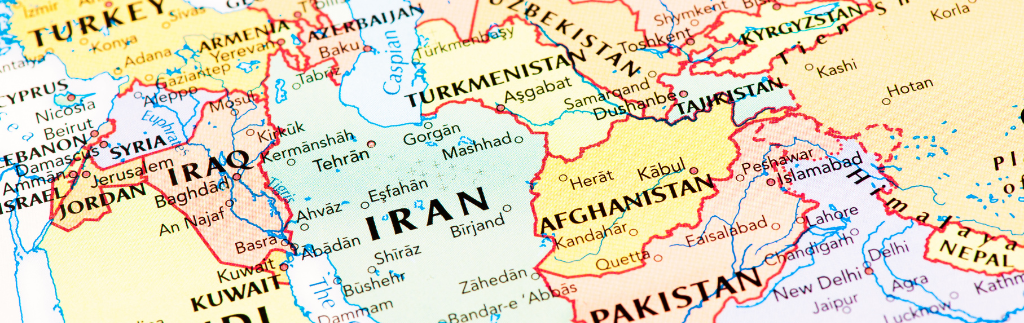
With the recent escalation of military action in Iran and the broader Middle East, it is important to understand the implications for international supply chains, both in the near and short term.
The most immediate concerns revolve around ocean cargo moving in and out of the Middle East, as well as air freight services and capacity. Below, we explore the short- and long-term impacts of the current situation.
Immediate Concerns
- Global air freight capacity has been significantly reduced due to the closure of airspace throughout the Middle East. Dubai and Qatar, in particular, are major hubs for airlines such as Etihad and Emirates and play a large role in air cargo flowing from the Indian Subcontinent (ISC) and similar regions into the US and Europe.
- Restricted air capacity will make services harder to secure throughout the ISC and Middle East, and we expect air freight rates to rise to extreme levels. The perishable goods market has been significantly impacted, and air freight capacity may need to be dedicated to recovery in this sector, causing further difficulties for general cargo.
- Closure of the Strait of Hormuz by Iran would severely limit container traffic in and out of the region. The most significant port for US trade beyond the Strait is Jebel Ali (Dubai). Other affected ports include Dammam (Saudi Arabia), Khalifa bin Salman (Bahrain), Hamad (Qatar), and Muscat (Oman).
- Imports to the US from these ports, or exports to them, may be held on vessels until alternative ports of discharge can be identified or alternate plans made. Most ocean carriers are, or are expected to, suspend bookings to these ports at a minimum and may take a more aggressive approach by refusing bookings to the entire region.
Should military actions cease within a short period, the likelihood and impact of longer-term concerns will be reduced. However, with no immediate resolution seemingly on the table, we must prepare for extended disruptions that may take several different forms.
Long-Term Concerns
- As air capacity challenges continue, capacity will be pulled from seemingly unaffected markets to serve the most challenged sectors. This will disrupt standard services and lead to a general increase in air freight rates, even in areas well outside those immediately impacted in the Middle East.
- Current attempts by ocean carriers to return to the Red Sea and Suez Canal will likely halt until the conflict is resolved. While this largely returns conditions to those seen since January 2024, it also diminishes hopes for restored stability and fluidity in Suez Canal transits, as several ocean carriers had recently resumed limited transits in the area.
- As ocean containers are withheld from entering the region, port congestion is expected to increase in surrounding areas. Ports of immediate concern include Colombo, Tanjung Pelepas, and Singapore, all of which may be forced to hold containers, limiting operational fluidity. If the conflict continues, these pressures will likely worsen.
- Ocean carriers are likely to implement surcharges related to increased operating costs. With a probable rise in fuel prices, Operational Recovery Surcharges may be announced, along with increases in bunker fuel rates and the potential introduction of new surcharges. These are likely to be applied across most trade lanes, not just those dependent on the Middle East.
- Increases in global fuel prices may also escalate domestic fuel surcharges, leading to significant increases in delivery costs within the US.
While the immediate impact on US trade may be limited unless cargo is directly involved in or routed through the Middle East, recent history has shown that disruptions of this nature tend to create ripple effects across the broader market. The longer disruptions remain in place, the more significant those impacts are likely to be.
If you have any questions regarding the immediate impact to your cargo, please contact your Mohawk Global representative.
By Chris Lindstrand, Vice President, International Transportation