

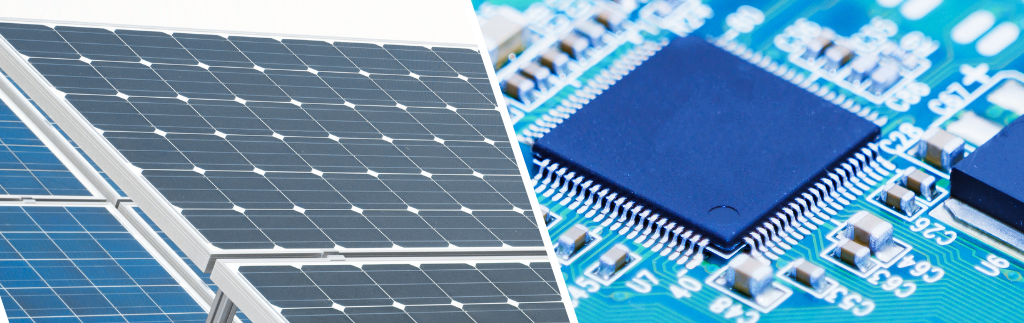
Polysilicon is a critical upstream input in both semiconductor manufacturing and solar energy production, making it a strategically sensitive material in global supply chains. A new 15% Section 232 tariffand minimum import price (MIP) program will apply to polysilicon and certain derivatives imported into the United States beginning December 4, 2026.
Under a proclamation signed August 6, 2026, the measures cover polysilicon, ingots, wafers, solar cells, and solar modules. Importers should review pricing, contracts, country of origin, and duty exposure ahead of the effective date.
What Are the New Minimum Import Prices?
The applicable minimum import prices are:
- Polysilicon: $21/kg
- Polysilicon ingots and wafers: $100/kg
- Solar cells: $0.22/watt
- Solar modules: $0.38/watt
To avoid the MIP being assessed as a specific tariff, importers must certify at entry that either:
- The first arm’s-length US sale will occur at or above the applicable MIP; or
- The sale is covered by a fixed-price contract entered into before August 6, 2026.
If the required certification is not provided, a specific tariff equal to the full MIP applies regardless of the merchandise’s actual value.
Even when a certification is provided, an entered value below the applicable MIP results in a specific tariff equal to the shortfall.
Materially inaccurate certifications or noncompliance can result in penalties and a permanent prohibition on importing covered products.
How Does the 15% Section 232 Tariff Apply?
The MIP and 15% Section 232 duty are separate requirements. Meeting the applicable MIP does not eliminate the 15% Section 232 tariff.
Beginning December 4, covered polysilicon and derivative products will be subject to the 15% ad valorem duty in addition to applicable duties, taxes, and fees.
For certain trading partners, special rates apply:
- Japan, South Korea, Taiwan, Switzerland, Liechtenstein, and EU member states: Combined Column 1 and Section 232 duties are capped at 15%.
- United Kingdom: 10% rate applies.
Importers should review country of origin and existing duty treatment when calculating total landed costs. Commerce and USTR may also adjust treatment for trading partners that adopt equivalent MIP measures.
Is There a Duty-Relief Option for US Investment?
Yes. Companies planning to build, refurbish, or expand US facilities for producing polysilicon, ingots, wafers, or cells may be eligible for an onshoring duty-relief program.
Commerce will accept qualifying plans for facilities where construction begins by January 20, 2029. Approved plans may allow duty-free imports of production equipment and covered products during construction, subject to investment commitments and ongoing reporting requirements.
Companies considering this option should evaluate the requirements carefully, as failure to meet commitments may result in retroactive duty liability.
What Should Importers Review Now?
Importers of covered polysilicon products should consider:
- Reviewing supplier pricing and contracts against the applicable MIP.
- Confirming certification and entry documentation requirements.
- Recalculating landed costs to account for the new 15% Section 232 duty.
- Reviewing country-of-origin and trade agreement treatment.
- Evaluating drawback eligibility, particularly for mixed-origin supply chains.
- Reviewing FTZ inventory and admission strategies. Covered products admitted on or after December 4 must enter under privileged foreign status.
- Evaluating whether an onshoring plan could provide duty relief.
With only four months before implementation, companies importing significant volumes of polysilicon or derivatives should begin reviewing their supply chains and contracts now.
If you have questions about how the new Section 232 tariff or minimum import prices may affect your imports, contact your Mohawk Global representative to review your duty exposure, compliance requirements, and potential duty-relief strategies.